

Cart
0
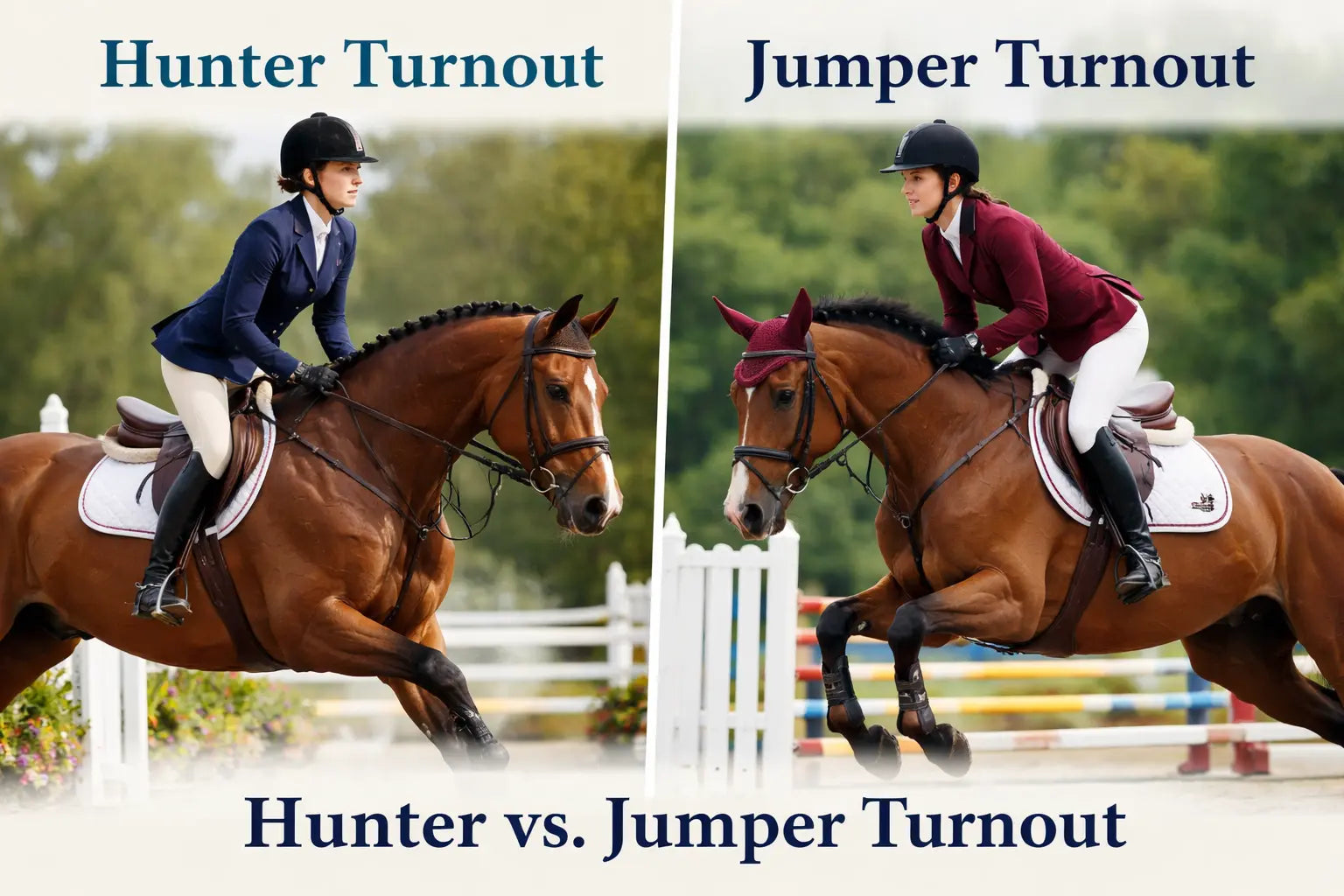
Key Differences in Horse and Rider Attire for the Show Ring
Hunters and jumpers may look similar from the outside but both involve riding a course of jumps in an arena. However, they differ quite a bit when it comes to horse and rider appearance in the show ring.
The hunter's turnout reflects tradition and directly influences how professional and correct your round appears to the judge. In jumpers, turnout leans more toward function and a modern athletic look but it still plays an essential role in presenting yourself as a polished competitor.
In this article, we break down the key differences in hunter vs. jumper turnout for both horse and rider. You’ll learn what to wear in the hunter ring what’s appropriate in the jumper ring the unspoken turnout rules judges expect you to follow and how small details help create the right first impression the moment you step into the show ring.
Why Turnout Matters in Hunters vs. Jumpers
If you’re getting ready for a show you might be looking up “hunter vs. jumper turnout” to understand better the expectations and trends of horse and rider turnout.
In a horse show setting turnout refers to the overall appearance cleanliness and grooming of both the horse and rider including how neat and polished their tack and apparel look. While both involve jumping a course in an arena each ring values a different tradition and your horse and rider presentation should reflect that.
In the hunter ring turnout follows a polished subtle and classic standard. Judges notice the overall picture the moment you enter and details like conservative colors and neatly braided manes contribute to how professional and correct your round appears.
In the jumper ring turnout leans toward function and a more modern athletic style. Riders have more freedom with colors and equipment and horses often go without braids. While the judging is based on time and jumping faults a neat professional appearance is still expected.
No matter which ring you enter a polished-looking turnout starts with well-fitted high-quality apparel. When your riding attire fits well and looks polished you create the right first impression and feel your best the moment you step into the ring.
Rider Turnout in the Hunter Ring
Hunter classes and rider turnout date back hundreds of years. The traditional hunter look traces its roots to formal hunt field attire where riders dressed in a polished conservative way that showed discipline and respect for the sport.
Over the years fabrics have become more comfortable and modern tailoring has improved. However, the overall picture has stayed the same. Hunter judges still reward a classic subtle appearance that lets the horse and jumping round take center stage.
The Hunter Coat and Show Shirt
A hunter coat should be conservative in color most commonly navy black or gray. The goal is to create a clean understated silhouette that looks timeless in the ring.
Under the show coat a show shirt with a white collar completes the look. It typically features a high structured collar often a choker or wrap neck style designed to keep the appearance clean and traditional in the ring.
But the structure and tailoring of a show shirt and especially a show jacket matter more than riders often realize. A well-fitted hunter show coat lies smoothly allows freedom of movement and instantly elevates your turnout.
The Grand Prix Show Jackets for example are crafted in Italy and known for their fine tailoring and premium materials. They create an elegant rider appearance while staying lightweight and breathable so you remain comfortable and free to move in the saddle.
Breeches Belts and Gloves—The Polished Details Judges Do Notice
In hunter classes light beige or tan breeches remain the standard. While some other colors are technically allowed the hunter ring favors a muted classic look that keeps the focus on the horse’s performance.
A classic belt can tie your entire outfit together and Huntley’s leather belts pair effortlessly with hunter breeches while adding a touch of timeless equestrian style to your presentation.
For example the Huntley Women's Fancy Stitched 1.5" Inch Wide Belt features premium full-grain leather and elegant stitching that matches the hunter style bridle elevating your turnout with a refined polished look perfect for the hunter ring.
Helmet Tall Boots and the Overall Presentation
The classic hunter look includes an ASTM/SEI-certified conservative low-profile helmet often matte or velvet in black or navy with a fixed peak that complements the ring’s traditional style.
Leather field boots and dress tall boots are the most common footwear for hunter riders. Because tall boots are a significant investment many riders use a tall boot bag to keep them clean and protected between rides and while traveling.
On non-show days riders often school in leather paddock boots and leather half chaps to prevent unnecessary wear on their show boots.
Your hunter rider apparel should create a cohesive conservative picture nothing flashy or distracting. While some of these attire pieces may seem minor in a ring where impression matters judges notice when everything looks intentional and put together.
Horse Turnout in the Hunter Ring
In the hunter ring horse turnout follows traditions even when the prize list doesn’t spell them out. These unspoken details help create the classic polished picture judges expect to see. The goal is simple: present a horse that looks neat traditional and ready to do its job without anything pulling focus away from the round.
A neatly braided mane (and often a braided tail in certain divisions) helps create a tidy refined appearance that highlights the horse’s neck and overall way of going. A white fitted saddle pad complements the overall clean conservative look.
The horse's tack should be traditional brown leather well cleaned and properly fitted. While black leather tack is technically allowed under USEF rules hunter tradition favors brown leather and using black can stand out in a way that detracts from the classic conservative picture judges expect.
You’ll also commonly see a standing martingale in hunters as it’s considered part of the traditional turnout. What you should avoid are flashy accessories bright colors or anything that distracts from the horse’s movement performance and traditions of the hunter ring.
Rider Turnout in the Jumper Ring
Jumper turnout looks very different from the hunter ring. Where hunters prioritize tradition and a polished classic look jumper turnout leans toward function comfort and a modern athletic look. Technically, jumper rules offer a lot of flexibility regarding rider turnout. Riders can wear a variety of shirt styles breech colors and equipment choices.
But like hunters there are still some unspoken norms. While jumpers are judged on speed and faults polished turnout still shows a respect for the sport.
In bigger classes, like Grand Prix or money classes especially at higher-end venues you’ll notice many riders choose to wear a show shirt and show jacket anyway similar to a hunter ring look. While it's not typically required it signals professionalism and respect for the level of competition.
Coats and Show Shirts
Jumper riders have more flexibility with colors and shirt styles than hunter riders. While traditional white show shirts are still common you’ll also see modern athletic show shirt designs and subtle color accents. Breathable athletic fabrics matter here because comfort and mobility directly support performance in the jumper ring.
In hot weather coats are often optional even when required in certain classes and many riders ride in just a performance show shirt.
Breeches and Accessories
White or very light-colored breeches are most common in the jumper ring because they create a clean sharp contrast with dark boots and tack.
At rated shows the exact breech color depends on the attire level required for the class under USEF guidelines. While lower levels often allow any color higher levels typically require white fawn or canary with white or fawn reserved for more formal classes like Grand Prix and Jumper Classics.
Dark or pastel colored breeches are not permitted at these levels which is why tan (fawn) or white is often considered the safest choice across divisions. Riders should always check the prize list for their specific show to confirm which attire standard applies.
Sleek belts and gloves still play an essential role in both fit and function for jumper riders though the overall look feels more modern than traditional. While belts aren’t required they help keep breeches secure and support a steady position during warm-ups and tight turns.
For example, a refined option like the Huntley Ladies Stirrup Buckle Snaffle Bit Leather Belt adds a unique polished practical touch to your turnout without distracting from the overall picture.
Helmet and Boots
Matte helmets are most common in the jumper ring and help create the modern sporty look riders aim for. Most riders choose ASTM/SEI-certified low-profile helmets in classic colors that balance style with safety and features like good ventilation and MIPS technology are invaluable for the demands of show jumping.
Field boots or dress tall boots are standard in the jumper ring though some riders choose high-quality black leather paddock boots paired with premium leather half chaps for a similar look.
Options like the LC Italia Full Leather Half Chaps and the Huntley Equestrian Custom Fit Premium Leather Half Chaps use supple full-grain leather that molds to the leg for a close glove-like fit while maintaining a polished appearance.
When paired with a quality paddock boot such as the Grand Prix Saltare Florence Paddock Boot the combination closely mimics the sleek look of a tall dress boot while often offering more flexibility and comfort for the rider.
Even though turnout isn’t judged in jumpers the way it is in hunters riders still keep their boots clean and polished to maintain a professional look. Overall, jumper rider turnout should appear neat athletic and professional while allowing for more personal expression and function than the hunter ring.
Horse Turnout in the Jumper Ring
Horse turnout in the jumper ring also offers greater freedom in style. The key difference from hunters is that jumper turnout doesn’t aim for tradition—it aims for a neat functional look that supports performance while still presenting a professional picture.
Unlike hunters braids are not expected and most horses wear their manes and tails naturally.
Square saddle pads are common and though color is allowed most riders still choose tasteful understated options like white or black sometimes with accents like colored piping a farm logo or another type of logo.
Running martingales are also frequently seen in jumper turnout as they suit the forward technical nature of jumper courses.
Coordinating Horse and Rider Turnout in the Jumper Ring—Color and Pattern Matching
In jumper classes many riders coordinate their apparel with their horse’s tack to create a cohesive look since turnout in the jumper ring allows far more flexibility than hunters or equitation. Non-traditional colors and modern patterns are widely accepted and you may even see rich tones like burgundy in show coats at higher levels.
It’s also common to see saddle pads ear bonnets and leg protection thoughtfully paired with breeches show shirts and accessories in matching or complementary colors. Sometimes this means solid unified tones and other times it’s subtle accents like a white pad and bonnet with colored piping that ties the whole picture together.


